
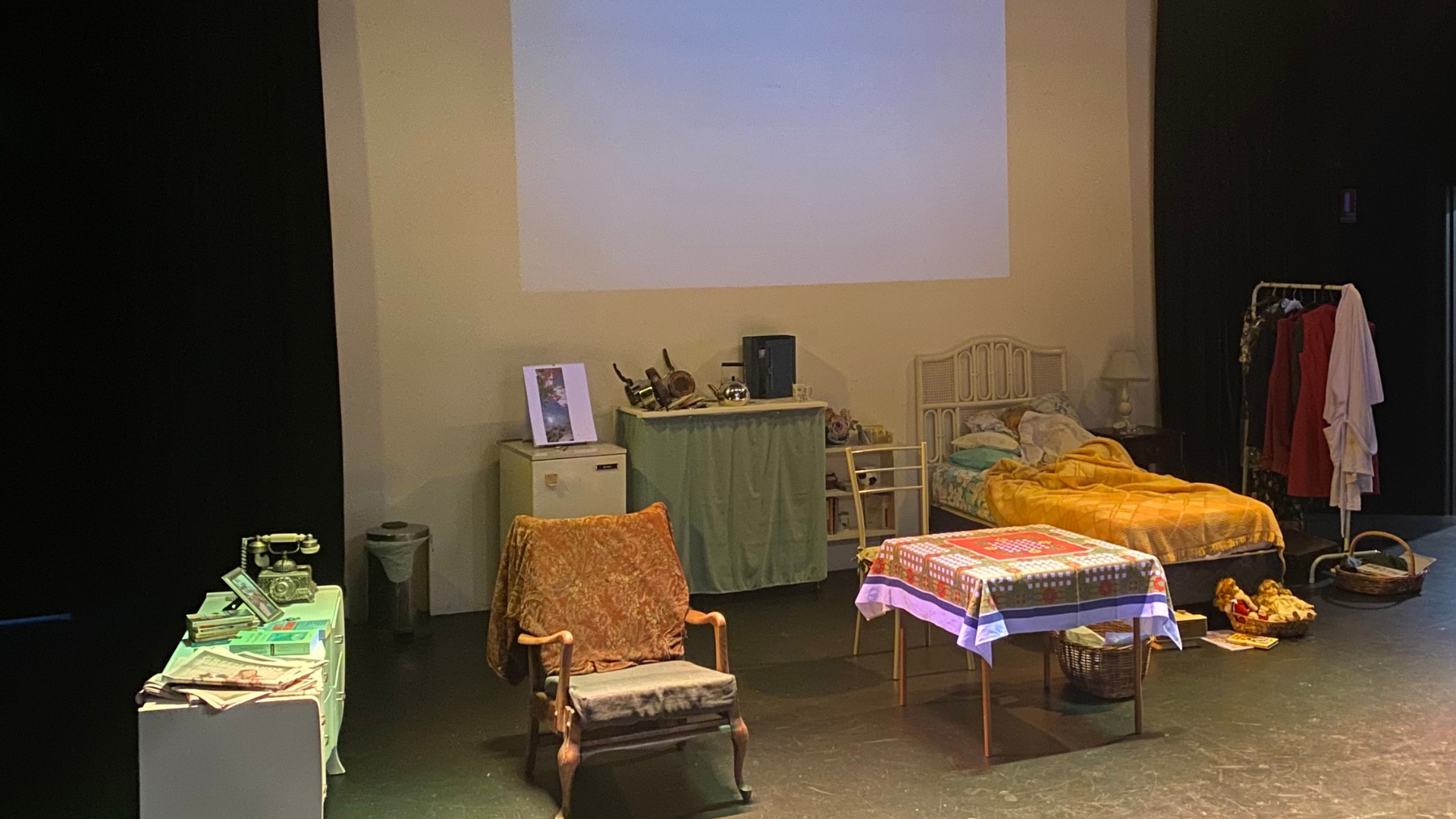
Little Absences written by Grazia Marin
The slow-paced storytelling masterfully blurs the lines between memory, dream, and a fracturing reality.
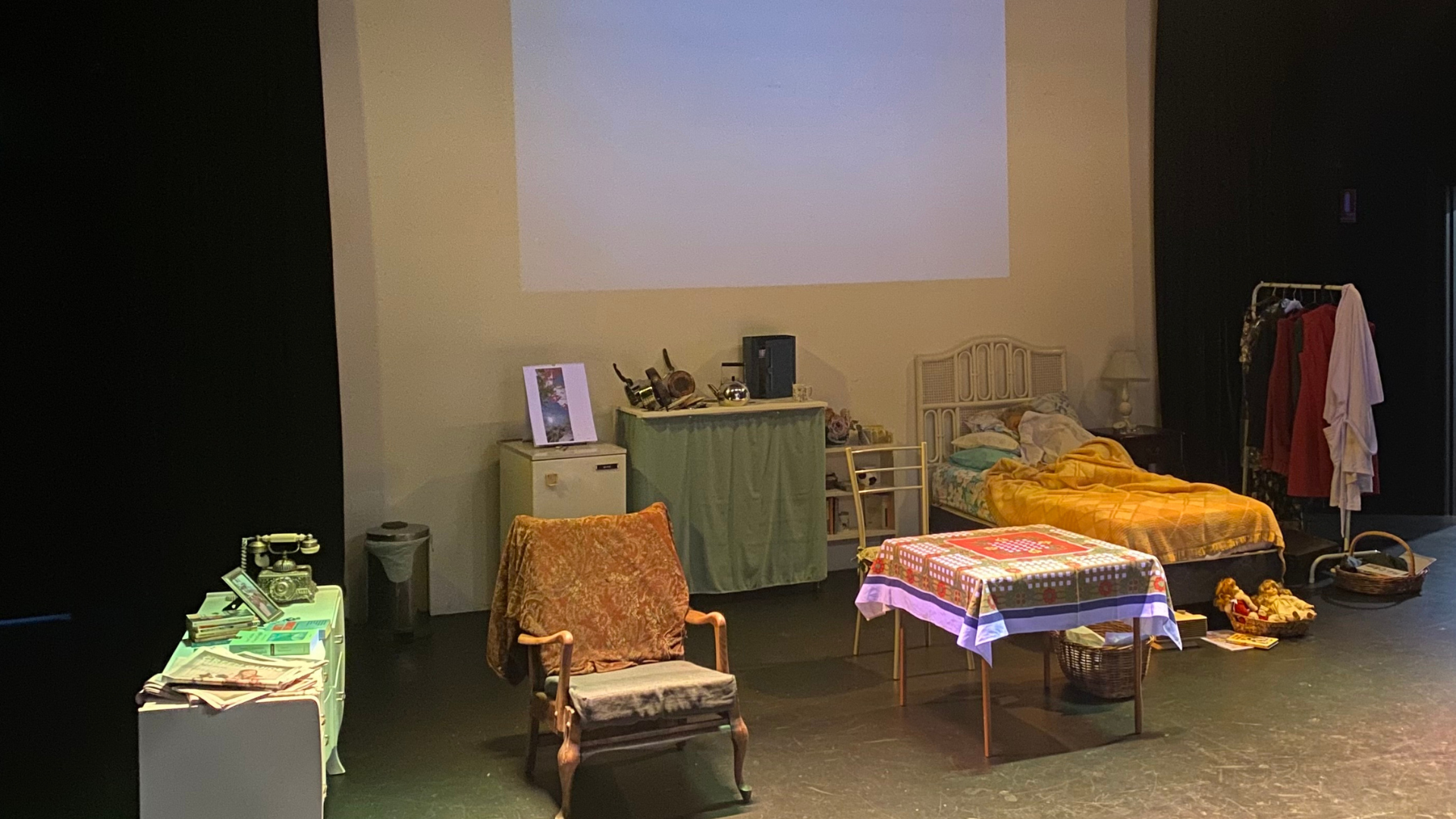
Little Absences
Playwright: Grazia Marin
Director: Elnaz Sheshgelani
Venue: Chapel Off Chapel
Little Absences, written by Grazia Marin, opens as the protagonist, Chris (Janet Watson Kruse), wakes up alone in her intimate one-bedroom studio apartment. She checks her calendar on the fridge, yet finds no special events to get excited about. Soon after, a phone call from her daughter, Jenny (Piera Dennerstein), informs Chris of a visit from her and her granddaughter over the weekend. Chris is thrilled, but Jenny sounds as though she organizes these routines out of a sense of guilt and responsibility toward her mother.
This surprisingly familiar life of frail, lone widows and their family is illustrated with a deliberate, measured, and therefore poetic pace. This allows the audience to travel the subtle, delicate, and transformative emotional landscapes that Chris navigates throughout the show. Director Elnaz Sheshgelani utilizes "active silences" and generous spacing, manipulating the sense of time and space between the theatre and our own lives, and between the worlds of memory, reality, and dream. The character of Chris could be our neighbor, our aunt, our mother, or even our future selves. The theatre space and its audience seem to be sucked into Chris’s mind—or perhaps our own—creating a weirdly familiar and dreamy sensation. Such sequences are unexpectedly visceral and, for me, confronting.
The poetically paced storytelling, masterfully delivered by the psych-physical Janet Kruse monologue, and punctuated scent of reality brought by Piera Dennerstein’s character, blurs the lines between memory, dream, and a fracturing reality. We see Chris in constant conversation with her late husband, Frank. By allowing Chris to shape who John was to her, the cinematic and theatrical effect grants the audience the imaginative space to construct his personality—perhaps making him even more vivid than a physical figure on stage.
Later that same morning, she has an unexpected visitor, Alex (Veronicka Devlin), and they become "little friends" through the poetry they both love. Eventually, Chris pulls out a pile of poems she wrote when she was younger, including one written when her own mother was sick: Little Absences. It was a lament from her heart back then, and Chris now realizes she has become her mother—standing in the agony and bittersweet melancholy between memory about her mother and the impending reality of aging.
The work prompted a personal reflection on my own mother, who has lived by herself since my father passed away, making these Little Absences feel incredibly near. If a theatre piece should function as a catalyst to transform one’s perspective on the world, Little Absences is the one; it strikes you, forcing you to question: what does it mean to lose a mother? What does aging mean? And, ultimately, how do we want to live our lives after all?
March 2026
![Workshop notes: Tony Yap [Repetition & Exhaustion]](https://images.squarespace-cdn.com/content/v1/644ca025aeceb31a67597791/0171b1bb-074f-4f54-8e04-c35b3e2647bb/teo+swee+an+%28210%29.jpg)
Workshop notes: Tony Yap [Repetition & Exhaustion]
During the initial two-minute improvisation—set to high-tempo music—my body’s immediate reaction was a standard demand for oxygen. However, I observed a transition where the body ceased to struggle and instead adapted.
Photo: Tae Swee An
Observations on Repetition, Exhaustion, and the Non-Story Narrative
1. Physiological Adaptation: The "Skills of Oxygen"
Yesterday’s workshop focused on the threshold of repetition and exhaustion, specifically investigating how a precise score can be maintained through "conservation of trance or transformative focus." During the initial two-minute improvisation—set to high-tempo music—my body’s immediate reaction was a standard demand for oxygen. However, I observed a transition where the body ceased to struggle and instead adapted.
Rather than feeling a lack of sophistication due to oxygen shortage, my body developed an internal economy that required less breath than usual. This aligns with the concept I call the skills of oxygen, where the body’s inherent intelligence overrides conscious effort [1]. This shift suggests that exhaustion is not a point of failure, but a point of entry where "the body starts to dance by itself," and the mind becomes a passive observer of the somatic process [2].
2. Physical Force: The "Tremor" and the "Quake"
The core of this practice involves injecting mechanical and intentional physical force into the body to observe how it moves within a movement framework. In this workshop, the focus was on identifying the point where movement moves beyond the category of "dance" and into a state of absolute necessity.
Tony Yap describes this as the "tremor" or "quake". When the intention is speed and spontaneity, the performer moves through a "zone of the indiscernible," where the body is no longer a tool of the ego but an unbridled display of energy. At this threshold, the "quake" functions as a ritualized balancing mechanism, allowing for a transition from domesticated movement into a state of visceral contemplation.
3. The Poetic Narrative: Narrative of Becoming
A significant question arose regarding the "non-story narrative" and how we deliver a story that is not based on a plot. In this movement context, "non-story" is synonymous with the poetic—there is no linear plot, yet the spectator is drawn into an emerging world.
Traditional narrative routines often create a "narrative trap," narrowing the audience's understanding to a fixed, predetermined meaning. Conversely, in a "narrative of becoming," the story is the "immediate, unfolding energy of the body in space" [3]. It is an "efficacious presence of non-thought" that gives the movement a power all its own, allowing meaning to emerge directly from the body's presence rather than from a script [4].
4. Individual Accent and the Refinery of Presence
Even in deep improvised movement, one cannot deny the "individual personality" or the specific "accent" the performer brings to the space. The "refinery process" is how each artist realizes their aesthetic, whether through painting, singing, or movement.
To achieve this deepening by each artist, we look toward a universal system of training that prioritizes energy management over technical skill. This should include the "negation of decreativity" (非芸術性の否定), where we do not block the creative forces by criticizing them or adhering to habitual "bags of tricks" [5]. By following this framework, the performer can facilitate the "tremor" state, allowing the individual accent to emerge while the conscious ego is bypassed by the physical reality of the work.
7 March 2026
Footnotes
[1]: "As the trance is induced or 'descended' into, the depth of the trance and the interiority of imagination prevail from the unconscious." (Yap, T. 2021, Trance-forming Dance, p. 37)
[2]: "After a certain point, as my physical exhaustion grew, my mind became tired and quiet... I felt as if my body started to dance by itself." (Yap, T. 2021, Trance-forming Dance, p. 109)
[3]: "The story is not about 'what happened,' but about the immediate, unfolding energy of the body in space. It is the 'story' of a muscle twitching or a breath catching." (Note: This is an interpretation of the "Phenomenological Presence" discussed on p. 18).
[4]: "There is thought that does not think, thought at work not only in the foreign element of non-thought... this non-thought is not simply a form of absence of thought, it is an efficacious presence of its opposite." (Yap, T. 2021, Trance-forming Dance, p. 129)
[5]: "Emptiness in Chinese Buddhism means 'the negation of decreation'... characteristics: 1. Do not block the creative forces by criticising them..." (Yap, T. 2021, Trance-forming Dance, p. 142-143)
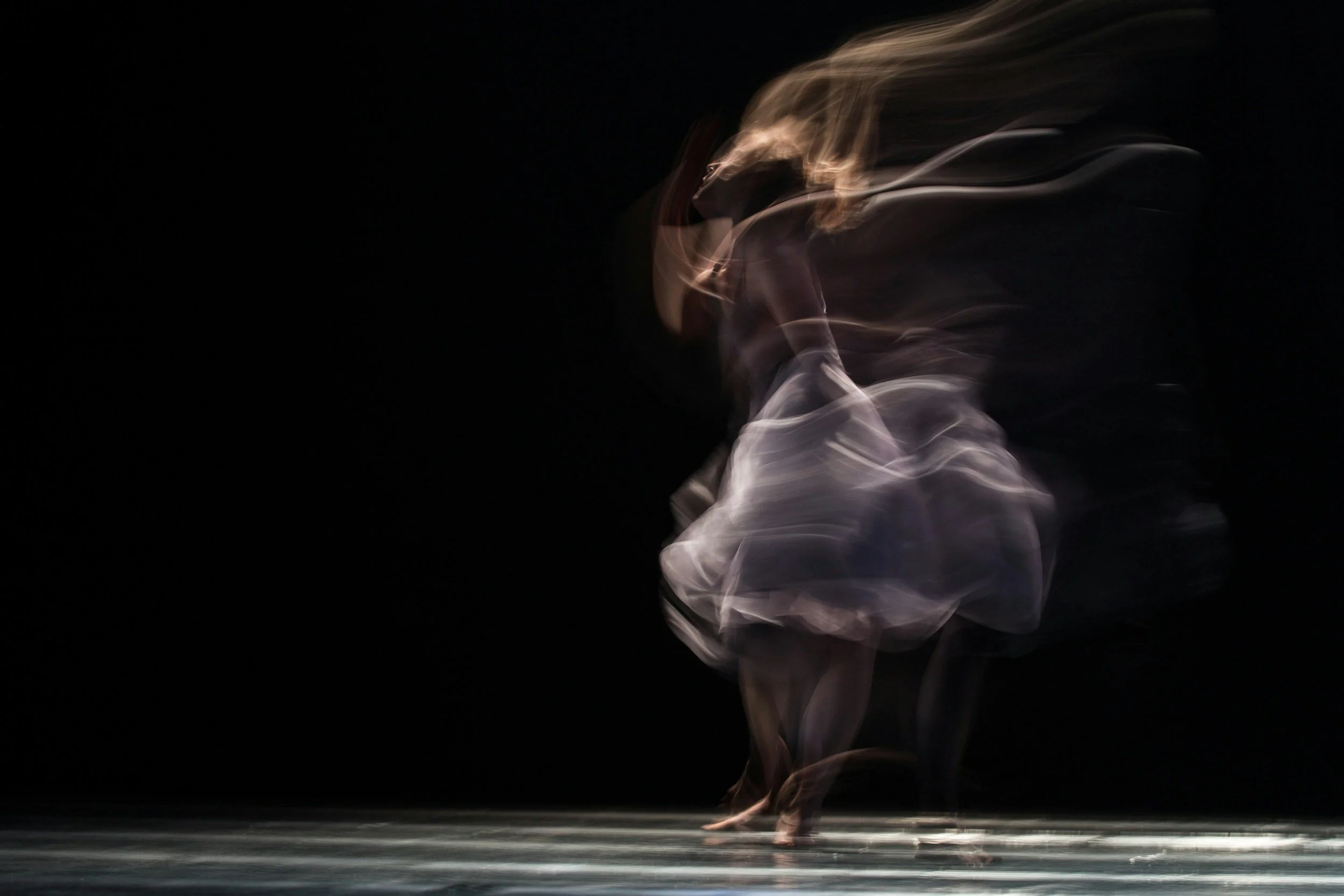
This Moment: Choreography by Yuiko Masuwaka
this interplay adds both physical and emotional depth, prompting the viewer to reflect on the internal dynamics and evolving relationships between the pairs.
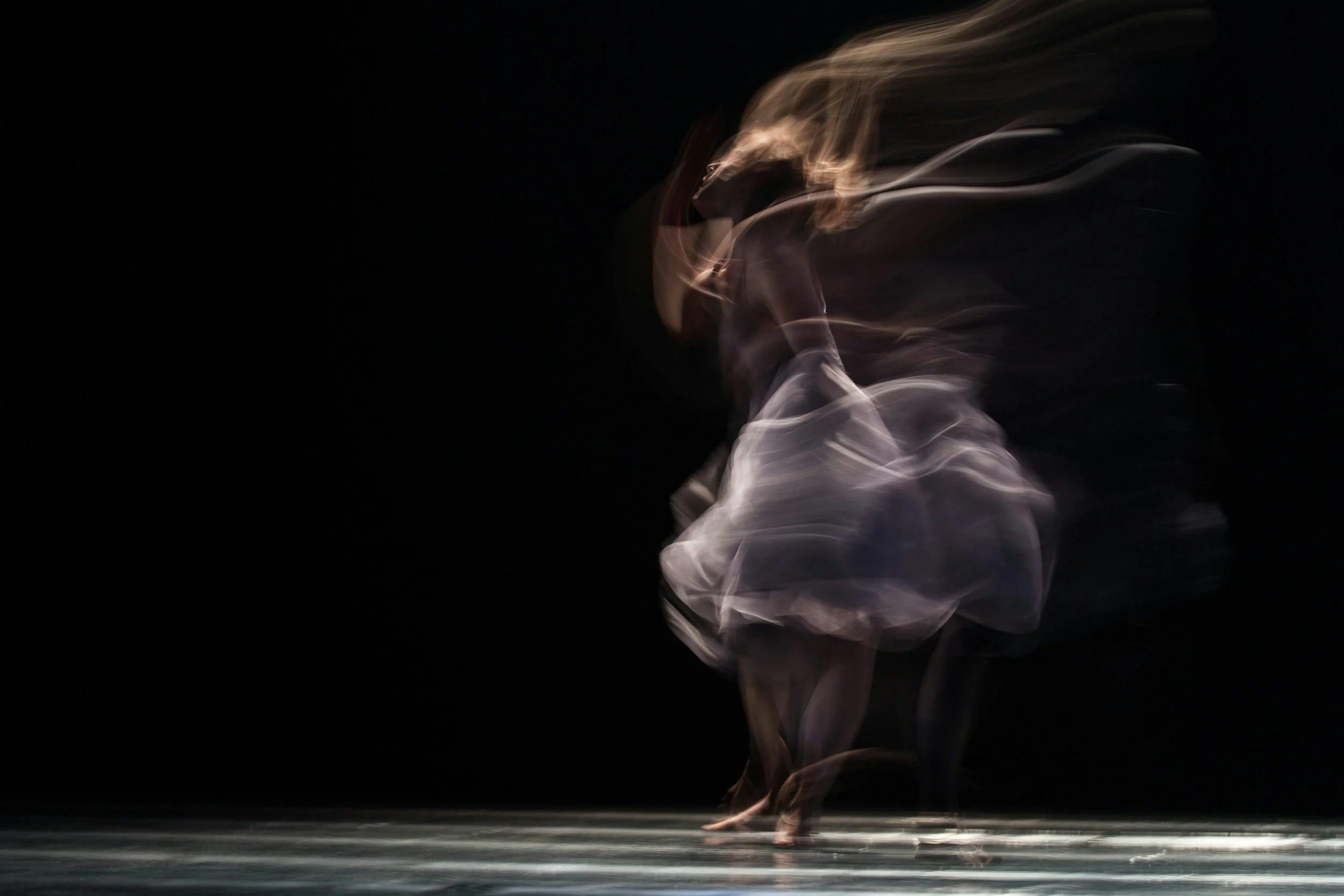
This Moment
Regents Theatre, Melbourne
as part of Signature works by the Australian Ballet
Choreography: Yuiko Masukawa
Music: Caroline Shaw, Plan & Elevation III-V
Costume Design: Ailsa Woodyard
The performance opens with a striking sense of presence as a lone dancer takes the stage. The intentional absence of music creates a profound silence, drawing the audience of 1,900 into a singular, shared breath. A second dancer sweeps in like a leaf on an autumn evening, reuniting with the first in a display of poetic, emotive choreography. The first touch between the two has an electrifying effect to start the duet—a sensation that is surprisingly rare to feel as audience within a ballet context.
As the performance continues, the euphoric stage of the Regent Theatre transforms into an eerily cinematic frame. Dancers appear, exit, and reappear to meet one another. Everything happens "with no happenings," yet each spatial movement and choreographed sequence flutters with something we have long yearned for. Yuiko Masukawa’s choreography skilfully breathes out a complex yet fluid vocabulary, masking high technical difficulty with an effortless grace through the dancers' bodies. The visual atmosphere is heightened by a thoughtful gradation of light and shadow; this interplay adds both physical and emotional depth, prompting the viewer to reflect on internal and psychological landscapes and the evolving relationships with dancers on the stage.
Caroline Shaw’s score is both sensible and evocative. The delicate vibration of the violin strings feels almost metaphysical, resonating against Ailsa Woodyard’s costume designs. The piece builds beautifully toward an open-ended finale, leaving the narrative conclusion to the audience’s imagination and ensuring a lasting resonance. The work’s success was best captured by the visceral reaction of a nearby audience member, whose spontaneous whisper of "beautiful" was an involuntary testament to the power of the performance.
2 March 2026