
Little Absences written by Grazia Marin
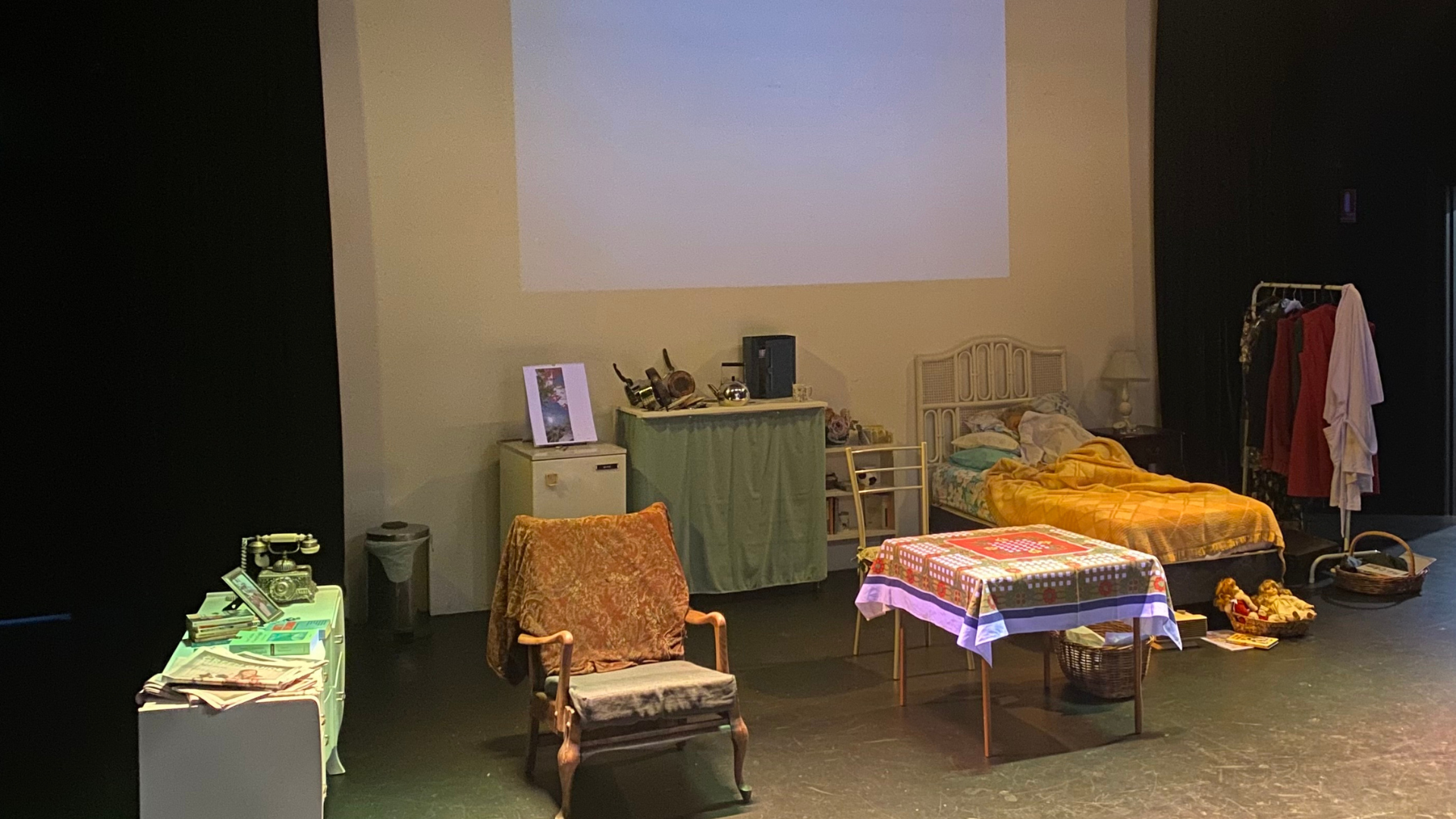
Little Absences
Playwright: Grazia Marin
Director: Elnaz Sheshgelani
Venue: Chapel Off Chapel
Little Absences, written by Grazia Marin, opens as the protagonist, Chris (Janet Watson Kruse), wakes up alone in her intimate one-bedroom studio apartment. She checks her calendar on the fridge, yet finds no special events to get excited about. Soon after, a phone call from her daughter, Jenny (Piera Dennerstein), informs Chris of a visit from her and her granddaughter over the weekend. Chris is thrilled, but Jenny sounds as though she organizes these routines out of a sense of guilt and responsibility toward her mother.
This surprisingly familiar life of frail, lone widows and their family is illustrated with a deliberate, measured, and therefore poetic pace. This allows the audience to travel the subtle, delicate, and transformative emotional landscapes that Chris navigates throughout the show. Director Elnaz Sheshgelani utilizes "active silences" and generous spacing, manipulating the sense of time and space between the theatre and our own lives, and between the worlds of memory, reality, and dream. The character of Chris could be our neighbor, our aunt, our mother, or even our future selves. The theatre space and its audience seem to be sucked into Chris’s mind—or perhaps our own—creating a weirdly familiar and dreamy sensation. Such sequences are unexpectedly visceral and, for me, confronting.
The poetically paced storytelling, masterfully delivered by the psych-physical Janet Kruse monologue, and punctuated scent of reality brought by Piera Dennerstein’s character, blurs the lines between memory, dream, and a fracturing reality. We see Chris in constant conversation with her late husband, Frank. By allowing Chris to shape who John was to her, the cinematic and theatrical effect grants the audience the imaginative space to construct his personality—perhaps making him even more vivid than a physical figure on stage.
Later that same morning, she has an unexpected visitor, Alex (Veronicka Devlin), and they become "little friends" through the poetry they both love. Eventually, Chris pulls out a pile of poems she wrote when she was younger, including one written when her own mother was sick: Little Absences. It was a lament from her heart back then, and Chris now realizes she has become her mother—standing in the agony and bittersweet melancholy between memory about her mother and the impending reality of aging.
The work prompted a personal reflection on my own mother, who has lived by herself since my father passed away, making these Little Absences feel incredibly near. If a theatre piece should function as a catalyst to transform one’s perspective on the world, Little Absences is the one; it strikes you, forcing you to question: what does it mean to lose a mother? What does aging mean? And, ultimately, how do we want to live our lives after all?
March 2026
